Menopause weight gain? You might not be eating enough protein.
One of the common changes during the transition to menopause is weight gain, and many women in midlife are falling short on the one nutrient that helps most: protein.
Find your personal protein target in under a minute.

Find your protein target
Answer a few quick questions. We'll calculate your personal target and show you exactly how to hit it. It takes about a minute.
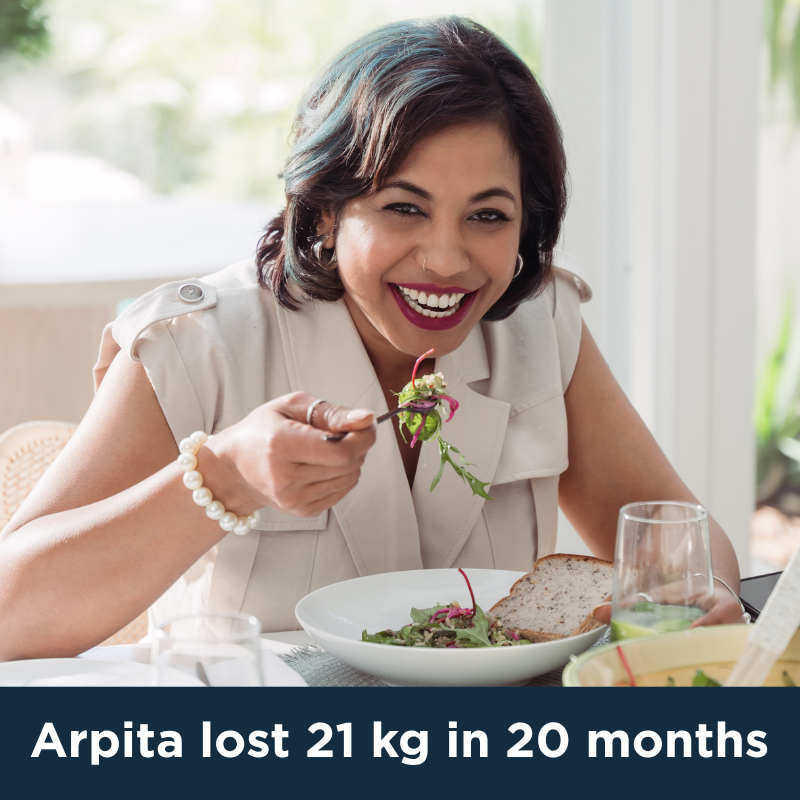
Why eating less isn’t always the answer
When CSIRO surveyed over 1,300 members, weight gain was what women reported most through menopause, ahead of fatigue, hot flushes and poor sleep. The instinct for some is to eat less, but that can backfire.
Most women in this stage are already eating less protein than their body needs each day. That daily shortfall is the protein gap, and protein is the nutrient that helps manage appetite, protect muscle and support your metabolism.
Get my free protein target
Your protein target is personal. Here's how to find yours.
There's no one-size-fits-all protein number, which is exactly why a generic "eat more protein" tip doesn't help. Your target depends on your body, your age, and your goals.
In your free result, you'll see:
✅ Your personal daily protein target, in grams
✅ A personalised estimate of how much weight you could lose, and by when
✅ How to spread it across the day so it actually keeps you full
✅ What getting protein right can do for weight management and muscle in midlife
✅ Which CSIRO Total Wellbeing Diet meal plans are built to hit it
Get my free protein target
 8 in 10 women in menopause report weight gain
 ~35g the average daily shortfall in protein for women aged 40-55 years
 Only 1 in 3 reported protein intakes optimal for weight management and muscle retention
Why protein matters more in midlife, not less
As we get older, our bodies become less efficient at using the protein we eat. So the need doesn't drop with age, it climbs. For women moving through perimenopause and menopause, being a bit more deliberate about dietary protein is a simple, practical step that supports appetite control, muscle and long-term health.
The CSIRO Total Wellbeing Diet was built around exactly this: higher-protein eating made easy and practical, so you can close the gap without a restrictive, count-everything approach.
Calculate my protein target

Do you have a protein gap?
"When weight gain occurs during the transition to menopause, it can be tempting to simply eat less. But making the right food choices and having enough protein becomes especially important at this life stage."
Dr Gilly Hendrie, CSIRO Research Scientist
How our members rate us
Our members consistently rate us as Australia's No. 1 weight loss program
You can’t manage a gap you can’t see. Take a minute, get your personal target, and see exactly how to hit it.