Louisa lost 16kg after menopause by prioritising protein
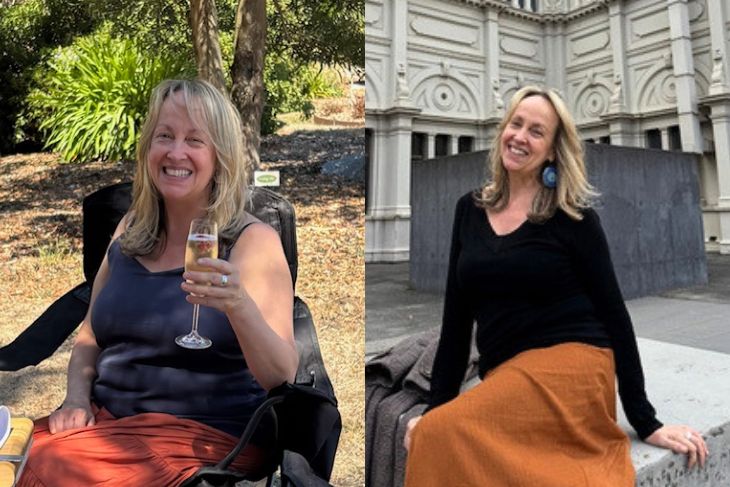
For most of her adult life, Louisa stayed slim without much thought. Then a hysterectomy in 2015 brought on a sudden menopause, and over the years that followed the weight crept on. At 58, the teacher from regional Victoria joined the CSIRO Total Wellbeing Diet, lost around 16kg, dropping from 80kg to a steady 64kg, and rebuilt her health around one thing she'd never focused on before: protein. Here's how she did it.
*Weight lost over 9 months. Individual results may vary.
Life before the weight loss
For years, Louisa's weight simply wasn't something she thought about. That changed after her hysterectomy in 2015, when menopause arrived almost overnight. “Lots of hot flushes, anxiety, depression. It was awful,” she said.
Other health challenges followed: a psoriatic arthritis diagnosis, high blood pressure, a total right hip replacement in 2018 and a left hip replacement in 2020. By 2023 she was using a CPAP machine for sleep apnoea. Sore knees made her reluctant to move, and the weight kept climbing.
Her eating was reasonably healthy, plenty of vegetables, but portion control was the problem. “Food became my comfort in the midst of all the challenges,” she said.
She remembers bending to pick something up and struggling because her tummy was in the way, and going to bed so full she couldn't roll over comfortably.
From 2019 she'd tried to lose weight on her own by eating more vegetables, with little success. “I felt like I had no structure to guide me. No matter what I did on my own, the weight wouldn't budge.”
Louisa's moments of truth
Louisa had more than one turning point.
The hardest came in February 2025, when her mother passed away in hospital from lung cancer, after years of falls and fractures linked to severe osteoporosis.
“After Mum's death, I began thinking about the importance of health, and how being proactive about it was critical,” she said.
Around the same time, her GP raised a weight-loss medication and wrote her a script for a semaglutide. Louisa left it in her glove box for about three months.
“I was already on so much medication. Could I do it another way?” she recalled. She'd never dieted before, so she decided to try one first. “I had nothing to lose if it didn't work.”
She'd also read that for every kilo she lost, that was roughly 4kg less load on her knees.
“That meant if I lost 15kg, it would be 60kg less pressure on my knees. So I gave it a go.”
Louisa had seen the CSIRO Total Wellbeing Diet advertised on television, and when she researched it, the science won her over. “I was impressed that it was an evidence-based weight loss program,” she said.
How Louisa made the program work for her
The program's templates gave Louisa the structure she'd been missing.
She started small, following the Total Wellbeing Diet program and using the Fast Start shakes. The unit-based approach made getting enough protein straightforward, and she learned to spread it more evenly across the day rather than loading it all into dinner.
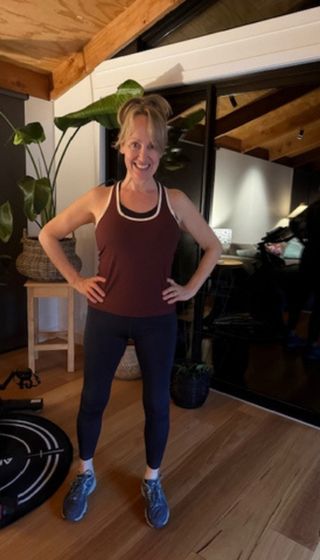
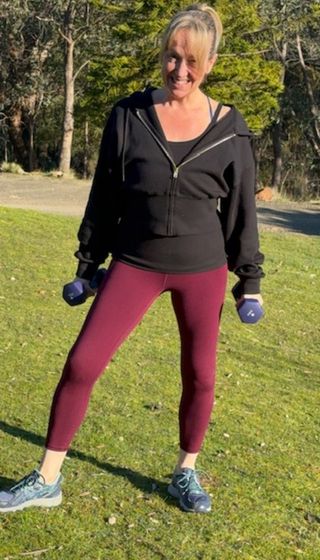
Another outcome was her movement. Louisa now trains four to five times a week, mixing cardio, resistance sessions and reformer Pilates, which she says has really helped her knee pain.
“I never really liked exercise before, but now I love it, and I feel bad if I don't do it.”
The role of protein during menopause
For Louisa, protein was one of the pieces that had been missing. She'd never built her meals around it before, and the program helped her put it into consistent, daily practice.
The program's higher-protein approach is grounded in CSIRO research, which points to protein's role in helping manage appetite and preserve lean muscle during weight loss.
This matters at every age, but it becomes especially important around menopause, when muscle and bone strength can decline.
Getting enough protein each day is one of the ways women can support their strength through this stage of life.
Louisa noticed the difference in how she felt. “I feel stronger when I do resistance training,” she said.
She also began eating protein-rich foods she'd never tried before, from lentils and edamame to black beans and seeds, alongside the lean meats and dairy she already ate.
Wondering how much protein you actually need through menopause? Your needs shift with age and life stage, and most Australian women fall short. Try our Protein menopause calculator to find your daily target.
Louisa's go-to protein sources
Louisa's everyday protein staples are simple and varied:
- High-protein yoghurt: a daily staple, often with raspberries
- Lean beef, chicken and fish: around 250g with vegetables at dinner
- Chicken or beef on Burgen bread: a protein-rich lunch with salad
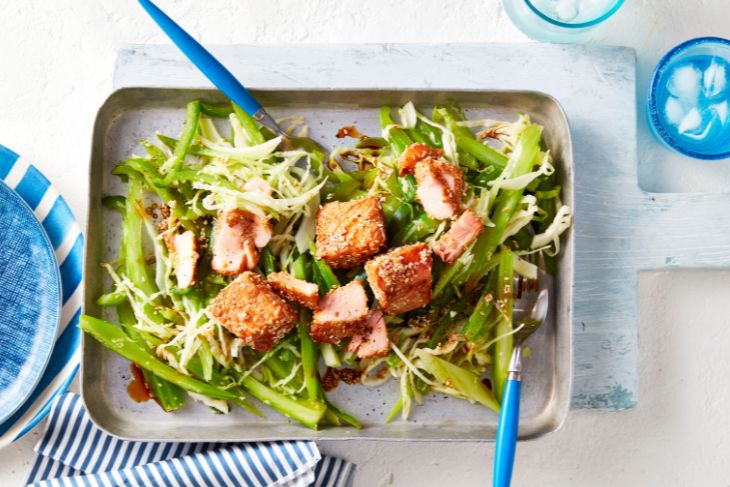
Click here to see some of our delicious, higher-protein recipes.
How Louisa's life has changed
The change Louisa notices most is how she feels. “I feel the best I have felt in 10 years,” she said. Her energy is higher, and she's more confident, especially fitting back into her old, smaller clothes.
She's also shared some health wins with her doctors, “Although I'm still on medication, my blood pressure is more manageable,” she said. After her weight loss, her sleep doctor suggested another sleep study. “In March 2026, my sleep doctor said that I now no longer require a CPAP machine,” she said.
Her knees have changed too. “Although I still feel pain in my knees, the pain is far more bearable. I can now walk longer distances, and I can delay my knee replacement surgery for both knees,” she said.
Louisa says staying strong matters more than ever. She's now maintaining her weight and plans to keep using the Total Wellbeing Diet app. “It's my safety net. In case I go off the rails, it's there to pull me back in line.”
What worked for Louisa
- Start small and let the structure guide you. Louisa began with the shakes and built from there, one step at a time.
- Spread your protein across the day. Getting protein into each meal, not just dinner, made the biggest difference for her.
- Find movement you enjoy. Louisa went from avoiding exercise to loving it, and reformer Pilates helped ease her knee pain.
- Keep your reason bigger than the scale. For Louisa, it was always about her health first.
- It's never too late. She'd never dieted in her life and started fresh at 58.
Louisa is one of more than 500,000 Australians who've turned to the CSIRO Total Wellbeing Diet to lose weight and feel better.
Inspired by Louisa? If you're navigating menopause, find out how much protein your body needs with the protein gap calculator.